Mommin Ain’t Easy: A Designer’s Embroidery Review
As a designer who has spent years digitizing patterns and reviewing countless machine embroidery design files, I have developed a keen eye for what works in the hoop and what looks better on a screen. When I first encountered Mommin Ain t Easy but You Made It Good, my initial reaction was one of cautious optimism. The phrase is catchy, relatable, and taps directly into the "mom life" niche that dominates the handmade market. However, as any experienced crafter knows, a witty quote is only half the battle. The execution determines whether a project ends up in a customer’s closet or in the donation bin.
This review breaks down how this specific graphic performs when translated from a digital concept into thread and fabric. Whether you are an Etsy seller looking to expand your spring catalog or a hobbyist making a personalized gift for a friend, understanding the practical implications of this design is crucial before you hit "start" on your machine.
First Impressions: Mood and Visual Personality
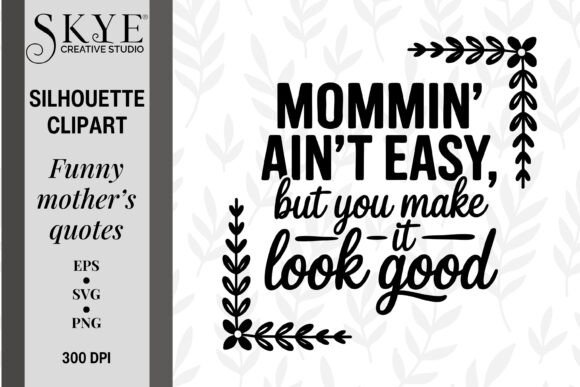
The core appeal of Mommin Ain t Easy but You Made It Good lies in its casual, conversational tone. It does not take itself too seriously, which makes it ideal for everyday wearables and home goods. Visually, the layout suggests a blend of playful typography and illustrative elements. In the world of Illustrations and Graphics, this type of design relies heavily on legibility and balance. For embroidery, this means we need to ensure that the transition between text and any accompanying icons remains clean.
The mood is empowering yet humorous. It acknowledges the chaos of parenting while celebrating the effort mothers put in. This emotional resonance is what drives sales in the craft business sector. However, from a technical standpoint, designs with this much personality often feature varied line weights. If the original file includes thin, script-like fonts or intricate details, they may pose challenges when stitched out, particularly on textured fabrics.
Real-World Application: The Tote Bag Test
To truly evaluate this design, I imagined applying it to a classic canvas tote bag. This is a staple small shop product and a popular item for farmers' markets and boutique gifts. Canvas is durable but has a visible weave. When stitching Mommin Ain t Easy but You Made It Good onto this material, the choice of stabilizer becomes non-negotiable. A cut-away stabilizer would likely be necessary to prevent the fabric from puckering under the tension of the stitches, especially if the design utilizes dense fill stitch areas.
In this scenario, the design acts as a focal point. If the lettering is too small, it gets lost in the texture of the canvas. If it is too large, it might distort the bag’s structure. The ideal placement would be centered, roughly 6 to 8 inches wide, allowing the message to be read clearly from a distance. This application highlights the importance of checking the hoop size compatibility before purchasing. Since the product description mentions it is ideal for mugs and wall art, we can infer it scales well, but embroidery has physical limits that print-on-demand services do not.
Fabric Considerations and Stitch Density
One of the most critical aspects of using any new embroidery file is understanding how it interacts with different materials. For sweatshirt embroidery, the plush texture of fleece or French terry can swallow up fine details. If Mommin Ain t Easy but You Made It Good contains delicate running stitch outlines or tiny text, these may disappear into the nap of the fabric. In such cases, opting for a bolder font style or adding a slight satin border around the letters can enhance visibility.
Conversely, when working on smooth cotton for baby embroidery projects like onesies or burp cloths, stitch density must be managed carefully. Babies have sensitive skin, so the back of the embroidery should be as flat as possible. Using a light-weight tear-away stabilizer and ensuring the design does not have excessive overlapping stitches will keep the finished product comfortable. Dark fabrics present another challenge; if the design relies on subtle shading, it may lack contrast. Testing the design in black and white mockups can help predict how well the thread colors will pop against navy or black garments.
Commercial Viability for Etsy Sellers
For commercial embroidery professionals and Etsy sellers, the versatility of a design dictates its profitability. Mommin Ain t Easy but You Made It Good fits seamlessly into several high-demand categories: Mother’s Day gifts, birthday presents for moms, and self-care merchandise. Its adaptability allows it to be used on custom apparel, kitchen towels, and even embroidered patches.
However, selling finished items requires strict adherence to licensing terms. The product description notes it includes "1 EP," which likely refers to a specific file format or package component, but it does not explicitly detail commercial rights. Before listing items on your store, you must confirm whether the license allows for unlimited physical sales or if there are restrictions. Additionally, since this is categorized under Graphics and originally described as an SVG for Cricut, ensure you have the correct digitized version for embroidery machines. An SVG is a vector file for cutting, not stitching; you need a proper PES, DST, or EXP file for your embroidery machine.
Technical Challenges and Best Practices
When working with quote-based designs, kerning and spacing are vital. In embroidery, letters that are too close together can merge due to thread buildup, creating a messy appearance. I recommend zooming in on the digitized preview to check for potential thread breaks or jumps. If the design includes an applique design element, ensure the placement lines are clear and the tack-down stitches are secure.
Here are some practical steps to ensure success with this design:
- Test on Scrap Fabric: Always stitch a sample on the same type of fabric you intend to use for the final product. This reveals issues with tension and density.
- Check Thread Contrast: Use high-contrast thread colors to make the text stand out, especially on busy or dark backgrounds.
- Verify Hoop Size: Confirm that the design fits within your machine’s maximum hoop area without requiring re-hooping, which can lead to alignment errors.
- Inspect Small Details: Look for tiny elements that may not stitch out cleanly. Simplify or remove them if necessary.
- Use Proper Stabilizer: Match the stabilizer to the fabric weight and stretch. Knits require more support than wovens.
Enhancing Brand Consistency and Appeal
Incorporating Mommin Ain t Easy but You Made It Good into your product line can strengthen your brand’s voice if it aligns with a playful, supportive aesthetic. It appeals to buyers looking for authenticity and humor. To maximize its impact, consider pairing it with complementary design assets, such as floral motifs or simple geometric borders, to create a cohesive collection. This approach not only increases the perceived value of the handmade product but also encourages customers to purchase multiple items.
Ultimately, the success of this design depends on thoughtful execution. By paying attention to fabric choice, stitch quality, and licensing details, you can transform a simple digital file into a cherished personalized gift or a best-selling tote bag design. Remember, the best embroidery projects are those where the technical precision supports the creative message, allowing the sentiment to shine through every stitch.